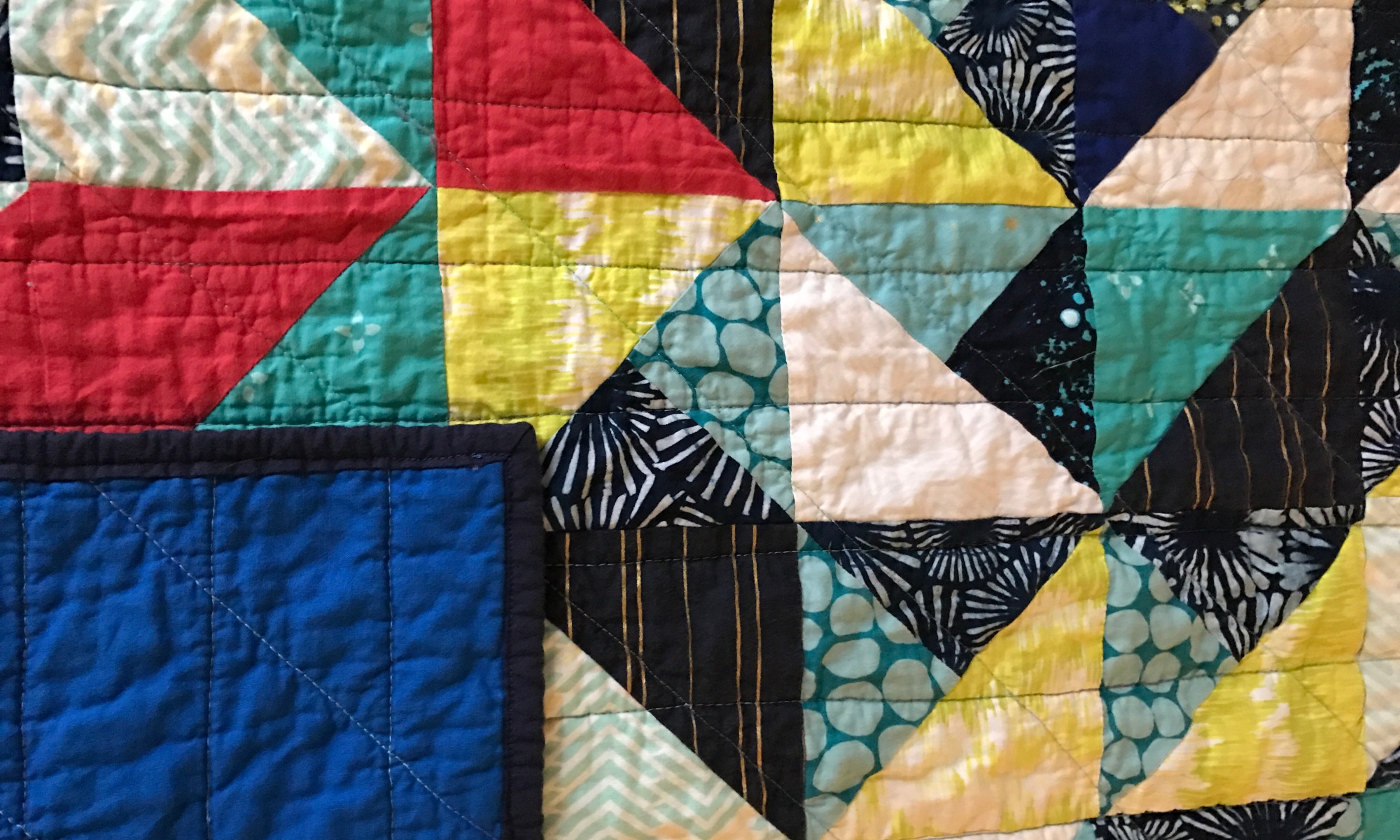
Losing Sight of the Specific: Lessons from Customer Service

It’s no secret that I work in customer service. I love it, actually. There’s nothing more fulfilling than helping someone else, especially when you are able to turn their terrible day into something not quite so bad. It’s powerful work, but it’s also a source for intense humility. You are at someone else’s service. You could get it wrong. And it takes a lot out of you.

Think about any bad experience you’ve had with customer service. Likely, it was bad because it felt like the person you were talking to wasn’t really interested in helping you–you were just one more caller asking for help. One more question, a faceless inquiry.

I won’t lie. It’s difficult to remain positive when you’re at someone else’s service all day. You face the limits of your own knowledge and patience. You’re not always treated like a real person–just a means to an end. It’s so easy to lose your sense of perspective and to let little things annoy you when you’ve become just another faceless helper. It’s easy to get caught up in your own agenda: to be liked, to be respected, to be right.

My theory is this: when we lose our ability to think in specific terms, we lose our compassion.

I live in a world where I need examples every day. Something went wrong in the software I support, and I need to see the place it happened, the circumstances in which it happened. I need to investigate specifics and reproduce errors. As a result, every case that comes my way is about something specific. Even when I’m asked about a general concept, it’s never really about something general; it’s always about how the general applies within a certain context.

This isn’t true just for the tasks I perform, it’s also true for how I go about my work.

Though I can think about what it feels like to be frustrated generally, I don’t know what frustration really feels like–and how it changes me–until I am frustrated. I don’t know what it means to be angry, not really, at least. I only know what it means to be angry at someone in particular. I don’t know what it means to love in a general sense, either. But I do know what it means to love someone specifically.

In the world of customer service, I strive never to lose sight of the fact that I’m speaking to someone who is their own person. I’m not talking to “a customer,” I’m talking to a particular individual. Just like I am not “just a customer service rep,” but a particular person. When I lose sight of the fact that I’m talking to a specific someone–with their own strengths, loves, and fears–that’s when I start to lose my patience and push my own agenda.

I’m someone who has decided to spend her working days helping people. But I also hope I can help people remember that the world isn’t filled with general concepts. It’s filled with specificity.

Every day I need to engage the particular, to love the specificity around me, and to try to help others do the same.

Information Overload

Binge-writing has become the unfortunate norm for me. I have periods of immense productivity–writing and editing up to ten blog posts in one evening. Thankfully, I can schedule them and not assault you with ten posts in one night. And this is a good thing, since it could be another two or three months before I feel like writing again. I’ve often wondered what drives this binge-writing.

One factor that I’ve considered a lot lately is my introversion. In her fantastic book, Quiet: The Power of Introverts in a World that Can’t Stop Talking, Susan Cain relates research that suggests a person’s quality of introversion or extroversion is directly realted to a person’s sensitivity to stimuli. Specifically, introverts are highly-reactive to stimuli, and therefore require less of it in order to be satisfied. Extroverts, on the other hand, are low-reactive to stimuli, and therefore require more of it.

Perhaps, then, my binge-writing is brought on by my reaction to stimuli. I’m not a big fan of much social media (I do it because I have to), and I can only stand so much blog-reading before I become agitated and cross-eyed from too many opinions. There are just too many things to potentially write about that I can’t narrow it down; too many other opinions to take into consideration; and then there are too many bloggers out there with pieces on things I consider to be almost useless that I no longer consider my own thoughts worth sharing.

Information overload.

Couple this high sensitivity (read: propensity to become easily overloaded with information) with a lack of writing discipline (no matter how much I say I want to write, I still have yet to cultivate a sincere daily or even weekly practice), and there you have it: I have the desire to write more often but feel overwhelmed by the sheer volume of other factors.

So when do I get any fair amount of writing done?

Usually, my highly-productive times of writing are when I am otherwise detained from my usual activities. I’m home sick (this very blog post is a product of illness induced, home-bound isolation), or my evening plans were cancelled; my boyfriend is out of the house for the evening, or he’s working on a solitary project in the other rooms of the house. Occasionally, I am able to write here on Sunday afternoons… but lately this time has been taken up by letter-writing, sewing, or meals with family.

I am left with my own age-old quandary: to find the will and determination to form a writing habit. I have just enough of an extrovert in me to flit around from task to task without settling down to one in particular for long periods of time, and just enough of an introvert to become easily over-stimulated by the swirling world around me.

What about you? Are you introverted or extroverted? Are you excited or overwhelmed by loads of opinions and information? Does this personality trait have any effect on your writing, or your ability to cultivate habits?

The Flip-Side of Gratitude

If you’re anything like me, your desk becomes a wild pile of papers and other sundry items rather quickly. Categorizing things into this or that pile isn’t much of a priority (surprisingly, considering there are only so many piles things can go into). Periodically, I take on the challenge of sorting through this pile of madness, and, like usual, I’m pleasantly surprised at the result.

Among my piles of paid bills, solicitation requests and other house-keeping updates, I had amassed quite a few thank you cards.

I’m a big fan of writing thank you notes. Like most things I’m a fan of, however, it’s often that my enthusiasm for writing thank you notes doesn’t get played out. I can’t tell you how many kind birthday presents or christmas gifts went sadly un-thanked in my life. But that’s another story for another post.

I’m a big fan of writing thank you notes in part because I’m such a fan of receiving them. Gratitude, the act of feeling thanks for an unmerited action, is just as pleasurable a thing to express as it is to receive that expression. You’ve poured your heart into doing something, and though the act of doing that something is itself fulfilling (otherwise, really, why do it?), it’s also immensely gratifying to hear someone say “thank you” for that hard work and heart. Even more, it’s astounding to hear “thanks” for something that you didn’t really pour your heart into–for just being who you are, or for saying a comment that might not have been pre-meditated, but because it was spur-of-the-moment, was that much more lovely.

When I cleaned up my desk recently, it was rather overwhelming to see the thank you cards that folks had written to me. Thanks for being a good friend, for visiting someone in the hospital, for making a stole for someone’s ordination, for sharing a good idea, or for having the time to look over someone’s writing.

I understand that a big part of what society expects out of charitable people is that they not spend a lot of time drawing attention to their charity. With the exception of hospitals and institutes being named after the keystone donor, we’re mostly a culture that asks folks to downplay their giving sides.

Well, forgive me for taking pride in acting like a good human being every once in a while.

The flip side of being grateful is that you learn to accept others’ thanks graciously as well. Instead of saying “oh, it was nothing!” and brushing off someone’s thanks, it’s enough to say “it was my pleasure.” Because for most of the kind things that we do, it really is a pleasure to act generously and thoughtfully, to be kindness for each other.

If you’re anything like me, though, you forget that you can act like such a good person. You forget that other folks appreciate you for your kindness and notice when you are thoughtful, talented, and considerate.

So I pinned all of those thank you notes to my cork board. To look at and be reminded.

Changes to Shipping – Another Etsy Update

Greetings from behind sniffles and a stuffy nose. Leave it to me to have a fender bender (yes, ugh…) and a cold in two weeks. Way to knock productivity off kilter and make anyone feel like a overwhelmed slob.

This time of relative frenzy has helped me to see that my usual 2-3 week timeframe for finishing made-to-order stoles just isn’t always possible. Most of the time, yes. But then there are always weeks where “most of the time” just doesn’t work. Such as, when two of your three available weekends are essentially out of commission… and your only real time to sew is on weekends.

The change has now been made to expect 3-4 weeks for made-to-order items. For the most part, stoles will be completed in the usual 2-3 weeks. I just hate that awful feeling when the 2-3 weeks I’ve promised is suddenly next to impossible. Hopefully this change cuts down on that awful feeling, but doesn’t give me too much freedom to procrastinate (hey, we all want to).

Now, back to the land of tissues, nasal decongestant, hot tea, and naps. Take care of yourselves, respect your limits, and love yourselves, y’all.

Remedial Lent

In my youth and today, the hardest part about Lent is finding a practice and sticking with it. Usually, Lent sneaks up on me (this year it is no different). As a result, I scramble for a practice to embark on during the forty days of Lent. And usually, it’s not as heart-felt a practice as I’d like it to be.

Many traditions will tell you to give up something for Lent. Chocolate, alcohol, and caffeine are typical suggestions. My father always advised me to take something on instead. Give sacrificially to charity, pray the Rosary every day, or volunteer somewhere new.

Whether you’re a person that gives up something or takes on something for Lent, the purpose is the same: find a part of your life in which you’re not living to the fullest and do something about it.

We “give something up” during Lent because, too frequently, our practices of consumption lead us to become desensitized to the conditions that leave us with so much and others with too little. We “take something on” to remind us of the ways in which our lives fall short–of true relationship, of forgiveness, of being our best selves.

“Our better self”, though, is different for everyone.

This piece was brought to my attention by a dear friend the other day. The simple dichotomy of “give something up” or “take something on”, though helpful in many situations, can be misused if applied without reflection or context. For those of us whose bodies bear the wounds of a culture at war (with ideals of beauty, of health… at war with notions of rightness, wrongness, and guilt), the unexamined call to “give something up” can be an invitation to inflict harm on ones’ self in the name of good. And unless you “take something on” that truly cultivates growth, you may find yourself feeling really good for doing things that, in the end, help no one (not even you).

So give up chocolate, alcohol, or caffeine by all means. Take on extra volunteer shifts. Just be sure that’s what you really need–not just what you think you ought to need.

I don’t know about you, but I’m in need of a lot of things. So many growing edges on me, truly. This Lent, I’m pledging to do more reflection–serious reflection. Because in reality, I’m not sure what it is I need. Hopefully you’ll see some of that reflection here, but just as often, you might not. I’ll be doing more reading scripture, more writing in my journal, more attention spent to cultivating a better, healthier me. I’ll keep a list, I promise.

Who knows? By Easter I may have discovered a practice that can last me beyond Lent.

Shipping: Weekly Esty Update

After last week’s flurry of orders (yes, three qualifies as a “flurry”), this week has been rather quiet. Just working on open orders a little at a time, and sending off two orders that were in process last week.

One of the joys of my creative work is sending out new orders. I usually forget to take pictures of new items because I’m just so dern excited to wrap them up, write a note to the buyer, and send them on their happy way! But one of the hassles of my work is that I don’t live or work terribly close to a Post Office. Thus, I have to scramble on “shipping” mornings to get to the Post Office (or trek out after I get home from work). And usually, I’m good at placing my receipts with tracking info into my bag and sending notifications as soon as I get to work. Sometimes, though, that’s not the case. And I get to send out the notification when I’m back home in the evening.

But such is the life, I suppose. I don’t have enough orders to automate my processes (at least, that’s what I tell myself). I enjoy going to the Post Office, printing out a shipping label, and hand-writing the address. Call me silly, that’s just something I love doing. I love the hand-made process of it all.

So this week I’ve had time to meditate on my shipping practices. Should I continue to use USPS Priority Boxes, or should I use my own? Should I start printing labels rather than hand-writing them?

I appeal to you, then. I know you’ve ordered things online before. What do you love most when you get your order in the mail? Has there been a particularly special package that you’ve received? What made it so special?

Mixing Full-Time Work with Creative Work

I’m inspired by Etsy’s Quit Your Day Job series to make transparent some of my own struggles with maintaining my day job, as it were.

I’ve written before about how much I love my day job. It’s a really awesome place to work; I get to help people do their jobs better, and in the process, nurture my own helpful and caring personality. Plus, I get to be geeky and tech-savvy in ways I never imagined I’d love being. Long story short: I have no intentions of “quitting my day job.” I just want to sew and create, too.

Maybe this is why I’m so fascinated by the seller’s stories featured on Etsy’s series. As someone who loves  and is fulfilled by her work-a-day life, but who also loves creating, I’m intrigued by the stories of folks who made the decision to go solely for the crafting side. People make decisions about their priorities all the time. Many times, the story is quite different from the ones in the Quit Your Day Job series: people make a decision to shuck their creative side to do the “right” or “correct” thing with their lives, or do do what’s necessary to make ends meet. And that’s one of the points of this series… to show others that it is possible to make ends meet AND delve into creativity full time.

So perhaps I am lucky. But holding on to and loving my day-job presents some interesting challenges:

Working weekends / nights

It may seem like a simple thing, but working 40 hours a week (plus about 2 hours daily commute on the trains) takes up a lot of your waking hours! And especially when the winter months mean shorter days, it can be easy to want to turn in as soon as you get home, and use precious weekend daylight hours for other activities (houses get messy and food needs to be replenished, after all).

This is when creativity starts to feel more like a chore and less like creativity. Best advice: small chunks. It’s easier to do 30 minutes’ worth of work on a project a night than try to cram it in all at once. But don’t fret; yours truly has pulled some all nighters for sewing projects before.

Maintaining email contact with customers

This may not seem like a big deal (especially when your full-time job is at a tech company, and you’re expected to be accessible via email all day), but it’s surprisingly challenging to stay on top of emails and Esty messages with clients when your full time work requires constant email communication, too. This is in large part due to my desire to keep my full-time work separate from my crafting work.

To combat this, I keep a dedicated browser for full-time work items, and a separate browser for crafting work items. My Etsy shop, recent conversations, and any USPS tracking info resides in one browser. I can minimize it (or shuffle it to a different “space” on my screen) and only come to it during lunch. Then, everything is already open and ready to act on.

Now, if I can only remember to take my USPS receipts with me to work… Many is the time I’ve had to follow up from a morning USPS shipment that evening because the tracking number was left in my car at the train station.